

Resources/Engineering
The Architecture of 1PWA: Achieving sub-second loads with Advanced Caching
Published

In the era of modern mobile networks, users expect web applications to load instantly. Native apps have long held the advantage due to local asset shell availability. Progressive Web Apps (PWAs) bridge this gap by introducing the Service Worker—a client-side proxy that gives developers precise control over asset delivery and cache lifecycle.
The Service Worker Shell Strategy
At OnePWA, we advocate for the App Shell Architecture. This architecture separates the static structural skeleton (HTML, CSS, core JavaScript, icons) from the dynamic page content. By pre-caching the Shell during service worker activation, we guarantee that subsequent visits load the structural framework of the page in under 100 milliseconds—even on sluggish 3G networks.
“Our testing showed that caching the application shell reduces first-contentful-paint (FCP) by up to 74% on recurring user sessions.”
Cache-First vs Network-First Fallbacks
Selecting the correct request interception policy is paramount. Static assets utilize a Cache-First resolution cycle, falling back to network delivery only during cache misses or explicit cache busting via service worker updates. For volatile business API routes, we implement a Network-First fallback policy. This ensures users receive the freshest product data while maintaining complete offline accessibility.
Background Sync & Outbox
Actions taken offline are written to a local outbox and replayed when connectivity returns. The shell stays interactive, and the user sees a pending state instead of a failed request.
Telemetry and Analytics
Cache hit rate, shell boot time, and replay success are reported with the same project id as install and push usage, so performance and spend stay on one timeline.

Written by Alex Thorne
Alex Thorne is the Chief Architect at OnePWA. He specializes in low-level browser cache engineering, Chromium service worker optimization, and reliable state-management synchronization over spotty connections.
Related Articles

Engineering••4 min read
Service Worker Background Sync Best Practices
Enabling reliable background requests that wait for connection recovery.
 Lisa Park
Marketing••6 min read
Why Push Notifications Drive 2x Mobile Engagement
Designing opt-in flows and timely, actionable push campaigns.
 Alex Thorne
Case Studies••9 min read
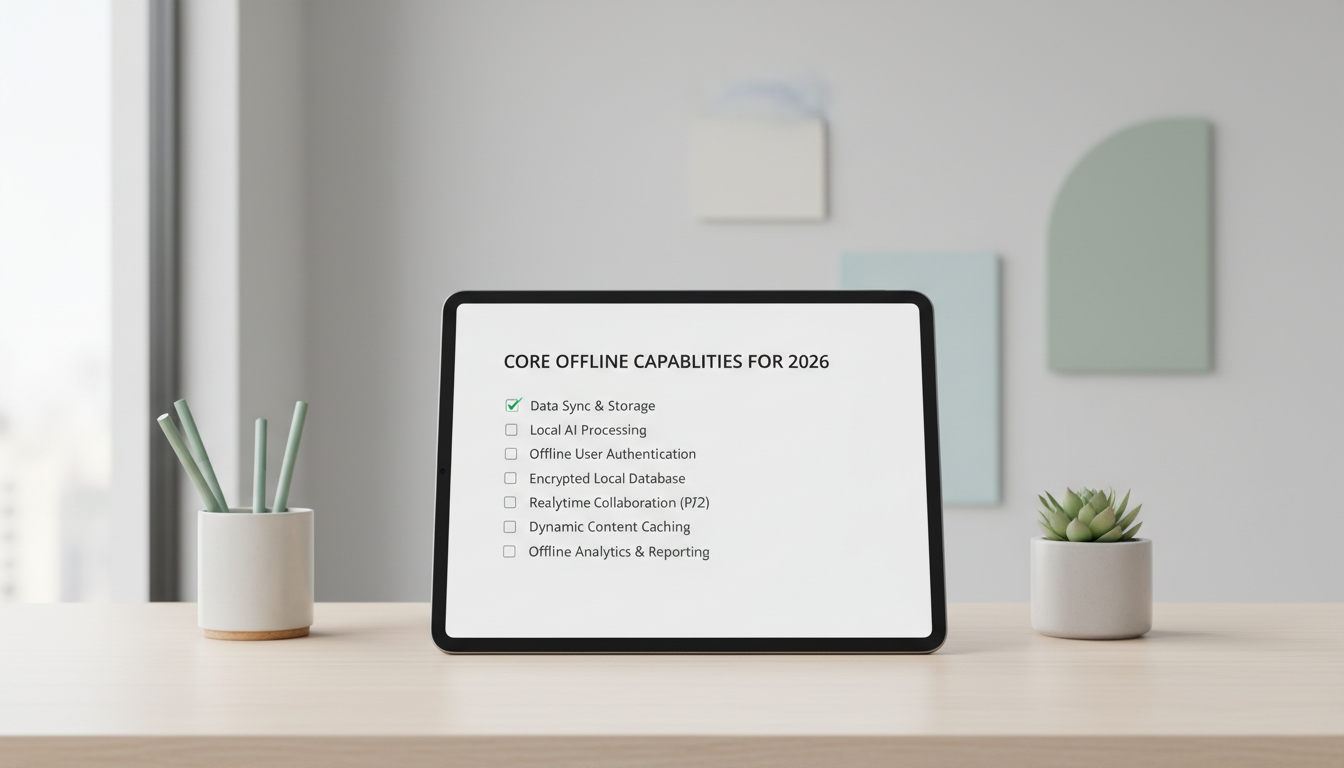
Core Offline Capabilities checklist for 2026
Everything you need to verify before declaring your app ready for offline usage.
 Marcus Brody